
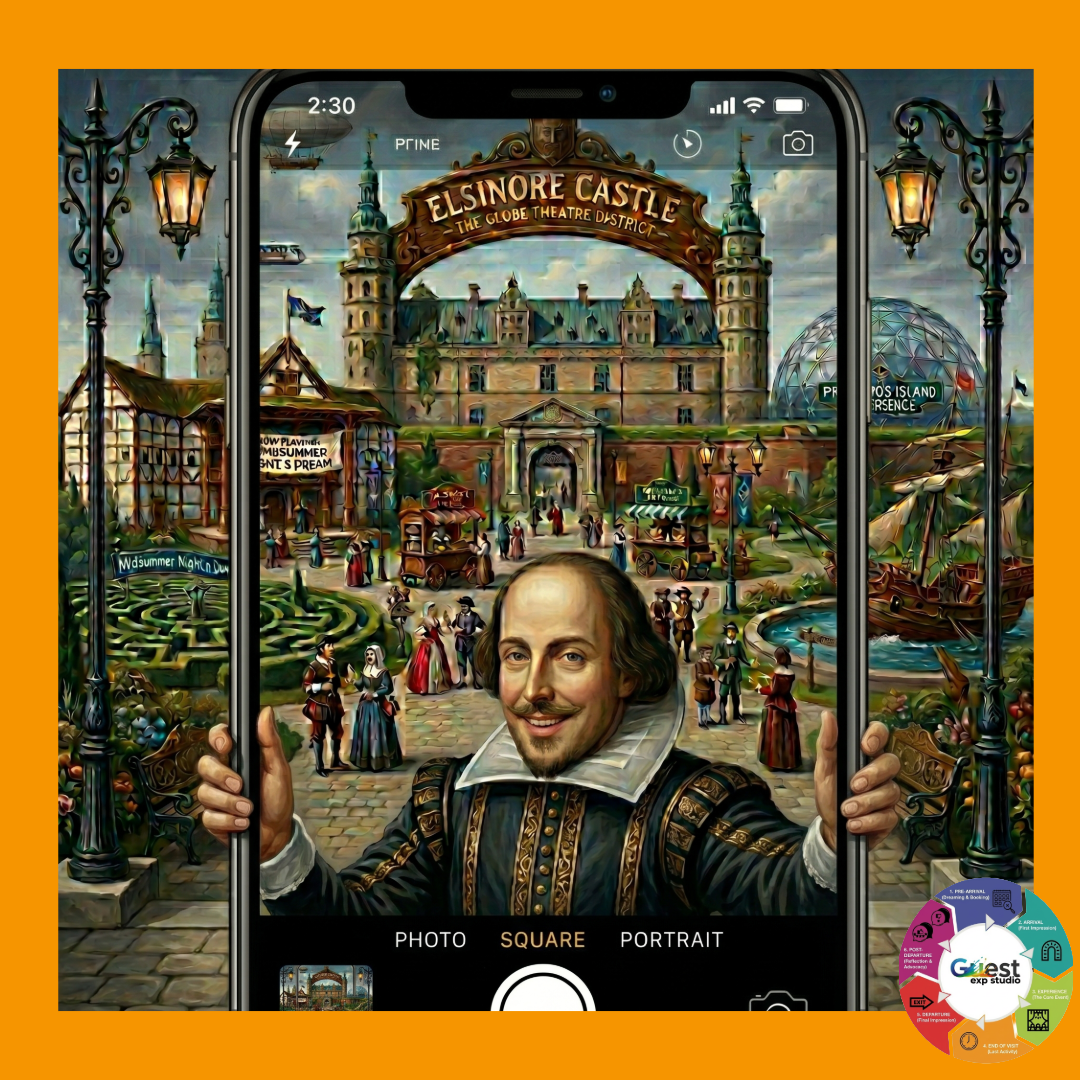
Shakespeare's Blueprint for the Modern Guest Experience:
It's Not Just Not Just Treachery, Murder, Suicide, or Eye of Newt.
June 5, 2026
Vero Piacentini, Guest Experience Studio
His Venue
-
The Yard: For a single penny, the groundlings could stand in the open-air yard directly in front of the stage. These patrons endured weather, crowding, mud, and noise in exchange for a highly energetic, close-up experience. Shakespeare knew how to manage this high-capacity, low-margin section without letting the crowd’s energy disrupt the performance.
-
The Galleries and VIP Boxes: In stark contrast, wealthier patrons paid up to sixpence for a seat in the sheltered, tiered galleries or private boxes. These guests demanded comfort, visibility, and status. Shakespeare effectively ran a multi-tiered hospitality venue, balancing a raucous, high-volume general admission crowd with a premium, high-yield demographic—all under one roof.
What Guest Experience Operators Can Learn from the Bard
- Study the competition relentlessly, but improve upon what already exists, making it your own.
- Create multiple experience that appeal to multiple audience segments without alienating any of them.
- Provide spaces that accommodate different levels of guest investment and expectation.
- Understand operational limitations and maximize existing assets before pursuing new ones.
- Build resilience into the organization so setbacks do not become catastrophes.
The Bard's Blueprint for Modern Venues
Four centuries ago, Shakespeare proved that a spectacular creative vision is only as powerful as the venue's ability to deliver it. He didn't just write masterpieces; he engineered an operational ecosystem that perfectly balanced artistic innovation with physical limitations, financial opportunities, and marketplace resilience. . As for his infamous recipe for eye of newt and toe of frog? Let’s just say it lacked sustainable guest experience goals and won't be appearing on any modern menus anytime soon.
The Next Chapter
At Guest Experience Studio, we help modern venues achieve that exact same harmony. Whether you are looking to design a layered, multi-tiered pricing strategy that maximizes your physical space, looking to seamlessly navigate a major operational pivot, or aiming to capture a broader audience without losing your brand's unique depth, we bring the strategic advisory you need.
Our consulting focus is built on a simple, foundational principle: helping venues truly understand their unique operational capabilities and matching them perfectly to sustainable guest experience goals.
Contact Guest Experience Studio today, and let’s work together to turn your venue’s next chapter into a legendary success.