
April 21, 2026 | Vero Piacentini - Guest Experience Studio
Successful Operational Communications
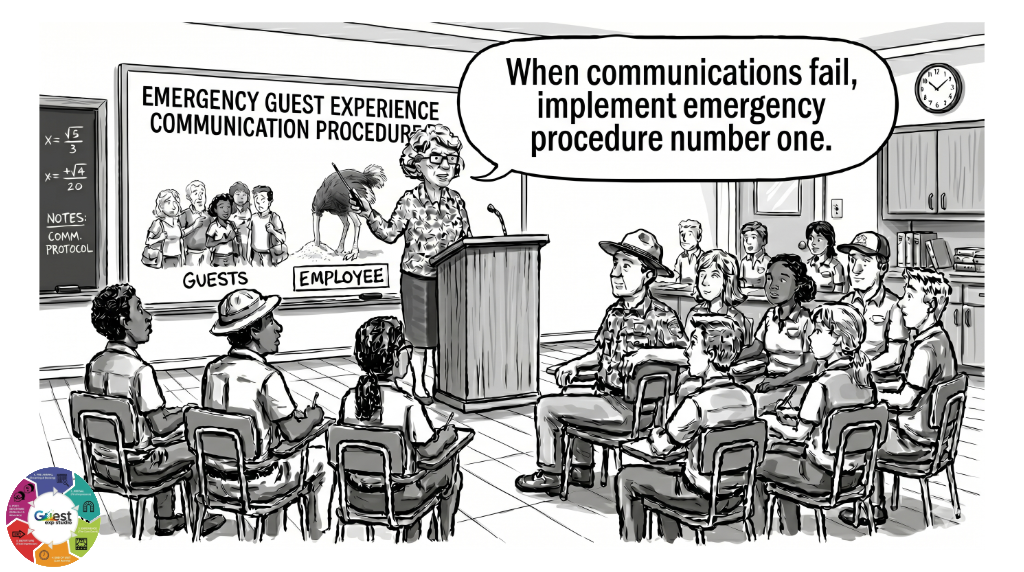
The explosion of communication technology has outpaced our ability to manage it. We have migrated from the era of memos and meetings into a chaotic landscape of fragmented digital channels. However, a higher volume of messaging has not led to a deeper clarity of understanding. Without a deliberate communication strategy, organizations in the arts, entertainment, leisure, and recreation spaces inadvertently force their staff into a state of perpetual distraction—ultimately leaving the guest to pay the price for the resulting operational friction. In these high-stakes environments, the absence of a formal communication plan does more than just frustrate staff—it actively degrades the guest experience.
The Missing Hierarchy: Priority vs. Noise
With so many communication options, most organizations today are drowning in information but starving for direction. When leadership fails to define the importance and priority of specific communications, employees are forced to guess which channels and messages truly demand their attention.
Without a clear path to send, receive, and respond to critical information, organizations run the risk of employees ignoring or failing to properly enact key directives. This systemic lack of clarity creates a culture of reactive operations by default, substituting temporary, “Band-Aid” fixes for long-term strategic alignment. Without a comprehensive strategy that governs both vertical communication (top-down directives and bottom-up feedback) and horizontal communication (coordination between peer departments), valuable staff energy is diverted from proactive preparation toward managing avoidable surprises. In high-stakes entertainment, leisure, and recreation environments, being reactive is almost always too late—and the guest’s experience inevitably suffers somewhere along their journey.
First Steps to Correction: Confirmation and Accountability
Regardless of the platforms used, one of the most debilitating habits in modern business is the assumption that sending information is the same as communicating it. This “check-the-box” mentality allows accountability to be passed on without actual acknowledgment.
In previous leadership roles, I’ve found a strict policy is necessary to combat this: An employee cannot assume important information was received until they receive explicit confirmation. If you didn’t receive confirmation, you didn’t communicate. Without this loop, the critical details that ensure a seamless guest journey—whether moving through the chain of command or across service teams—can fall through the cracks of your operations.
Path Forward: Communication as a Tool, Not a Byproduct
Organizations must stop treating communication as a byproduct of work and start treating it as the primary tool that enables work. High-stakes guest environments require precision. Without a policy that accounts for communication channels, message priority, and clear accountability, organizations cannot consistently design and deliver intentional guest experiences.
Successful Communications
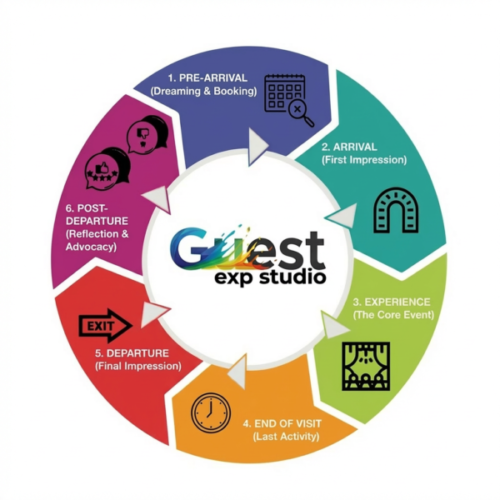
When you establish clear channels, message priority, and explicit confirmation as your operational communication baseline, you do more than just prevent daily fires—you build an agile, proactive system capable of delivering seamless information transactions at every touchpoint. Look past the boundaries of your organizational communications: connect your teams, streamline your internal alignment, and empower your frontline staff. When your internal operation is seamless, your guest experience will be unforgettable.
How does your venue bridge the gap between departmental planning and frontline execution? Let’s connect to discuss how implementing a comprehensive communications program that aligns your guest journey with your operations, and unlocks your venue’s true operational potential.