

June 5, 2026 | Vero Piacentini - Guest Experience Studio
The Modern Guest Experience for Arts, Entertainment & Leisure:
It’s More Than Murder, Treachery, Suicide, and Eye of Newt
If your high school English class had you doodling in your notebook while your teacher recited Hamlet, you now have a professional reason for studying Shakespeare that is anything but boring. Long before modern theme parks, luxury resorts, and high-tech venues focused on the art of the guest experience, William Shakespeare was running Elizabethan London’s ultimate entertainment empire. He wasn’t just a poetic genius; he was a brilliant, bootstrapping businessman and a pioneering guest experience innovator whose savvy strategies still serve as the foundation for modern guest experience programs today. From inventing the original multi-tiered hospitality venue to managing rowdy crowds and orchestrating epic logistical pivots, Shakespeare knew exactly how to give the people what they wanted. Ready to see how a 450-year-old playwright created a modern guest experience? Read on.
In the fiercely competitive entertainment marketplace of Elizabethan London—where rival playhouses vied for audiences, acting companies battled for patronage, and playwrights fought relentlessly for relevance—Shakespeare’s success was never a matter of luck. He thrived by constantly adapting; while competitors fought for the same local foot traffic, Shakespeare continuously modified his stories, refined his productions, and adjusted his business strategies to meet changing audience expectations, masterfully matching his operational capabilities to sustainable guest experience goals.
Reinventing a Better Story and Experience
Shakespeare understood that innovation rarely emerges from a blank page. He borrowed heavily from the theatrical traditions of the Greeks and Romans, drew inspiration from Italian Renaissance literature, and mined historical chronicles for dramatic material. Yet he was never a mere imitator. Where classical drama often adhered to rigid structures and conventions, Shakespeare adapted those models to fit the tastes of London’s growing theater audience. He took familiar stories, centuries-old histories, and popular novellas and transformed them into works of remarkable emotional and intellectual depth. The result was a product that felt both familiar and entirely new.
At the same time, Shakespeare showed little interest in obeying theatrical rules simply because they existed. He blended comedy into tragedy, elevated commoners alongside kings, challenged traditional character archetypes, and filled his stories with unexpected twists and subplots. By balancing recognizable source material with innovation, he consistently distinguished himself from competitors.
Shakespeare’s Venue
The Globe Theatre was more than a stage. It was a carefully organized system designed to accommodate different audiences with different expectations. Shakespeare understood that his patrons were not a single, uniform group. Some arrived with only a penny to spend. Others arrived prepared to pay significantly more for comfort, visibility, and status.
-
- The Yard: For a single penny, the groundlings could stand in the open-air yard directly in front of the stage. These patrons endured weather, crowding, mud, and noise in exchange for a highly energetic, close-up experience. Shakespeare knew how to manage this high-capacity, low-margin section without letting the crowd’s energy disrupt the performance.
-
- The Galleries and VIP Boxes: In stark contrast, wealthier patrons paid up to sixpence for a seat in the sheltered, tiered galleries or private boxes. These guests demanded comfort, visibility, and status. Shakespeare effectively ran a multi-tiered hospitality venue, balancing a raucous, high-volume general admission crowd with a premium, high-yield demographic—all under one roof.
By accommodating every social class within a single venue, Shakespeare ensured that no segment of the market was excluded. The Globe’s success depended upon this balance. Shakespeare’s true genius wasn’t just his ability to pen a masterpiece; it was his understanding that a great script means nothing if the venue fails to deliver on the guest’s expectations. He didn’t just build a theater; he built an operational ecosystem that aligned the creative product with the physical limitations and financial opportunities of his space.
An Experience for Everyone
Shakespeare’s audience spanned from laborers and apprentices to merchants, lawyers, and nobility, and rather than targeting a single demographic, he designed a layered approach that intentionally spoke to everyone simultaneously. By seamlessly weaving philosophical debates, political intrigue, and lyrical poetry alongside sword fights, ghosts, slapstick humor, and bawdy jokes, a single performance rewarded both casual spectators and devoted enthusiasts. Ultimately, by refusing to alienate any portion of his audience, Shakespeare achieved a broad, democratic appeal without ever sacrificing depth.
The Ultimate Operations Logistical Pivot
In the winter of 1598, Shakespeare and his fellow shareholders faced a serious threat. A lease dispute placed the future of their theater in jeopardy. Rather than surrendering a valuable asset, the company took extraordinary action. Under cover of winter, they dismantled the structure timber by timber, transported the materials across the River Thames, and reconstructed the theater on a new site. The result was the Globe Theatre. The feat required coordination, planning, investment, and determination. It also demonstrated the advantages of shared ownership. Because the actors, managers, and investors all possessed a stake in the enterprise, they were united in preserving its future.
“To Thine Own Self Be True”
In Hamlet, Shakespeare penned the famous line, “To thine own self be true”—a philosophy that applied equally well to the physical operation of the Globe. Understanding exactly what his venue could and could not do without elaborate stage machinery, Shakespeare relied on the architecture of the building itself, using trap doors for emerging spirits, transforming balconies into castle battlements, and letting vivid language fill the gaps where scenery fell short so that the audience’s imagination became part of the performance. Rather than depending on technological spectacle, he maximized the capabilities of the tools already available to him while still embracing calculated operational risks, frequently incorporating practical effects, animal blood, and pyrotechnics to heighten realism. This willingness to push boundaries took a catastrophic turn on June 29, 1613, when a theatrical cannon ignited the Globe’s thatched roof during a performance of Henry VIII, quickly consuming and destroying the building; yet, demonstrating true operational endurance, the company rebuilt and reopened the theater the following year with a tiled roof specifically designed to reduce future fire risk.extraordinary action. Under cover of winter, they dismantled the structure timber by timber, transported the materials across the River Thames, and reconstructed the theater on a new site. The result was the Globe Theatre. The feat required coordination, planning, investment, and determination. It also demonstrated the advantages of shared ownership. Because the actors, managers, and investors all possessed a stake in the enterprise, they were united in preserving its future.
What Guest Experience Operators Can Learn from the Bard
More than four centuries later, Shakespeare’s success offers a surprisingly relevant blueprint for guest experience professionals. His achievements were rooted in five principles:
-
- Study the competition relentlessly, but improve upon what already exists, making it your own.
-
- Create multiple experience that appeal to multiple audience segments without alienating any of them.
-
- Provide spaces that accommodate different levels of guest investment and expectation.
-
- Understand operational limitations and maximize existing assets before pursuing new ones.
-
- Build resilience into the organization so setbacks do not become catastrophes.
The Bard’s Blueprint for Modern Venues
Four centuries ago, Shakespeare proved that a spectacular creative vision is only as powerful as the venue’s ability to deliver it. He didn’t just write masterpieces; he engineered an operational ecosystem that perfectly balanced artistic innovation with physical limitations, financial opportunities, and marketplace resilience. . As for his infamous recipe for eye of newt and toe of frog? Let’s just say it lacked sustainable guest experience goals and won’t be appearing on any modern menus anytime soon.
Your Venue's Next Chapter
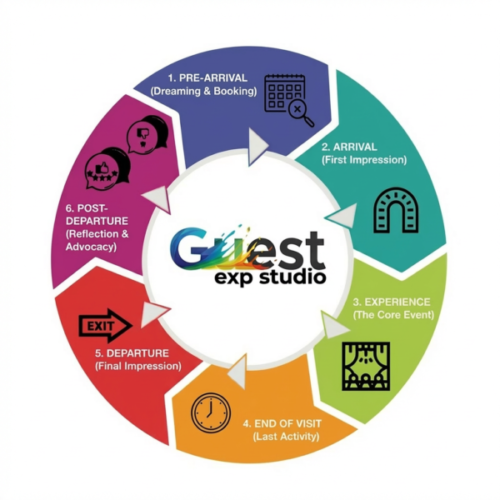
At Guest Experience Studio, we help modern venues achieve their successful next chapter. Whether you are looking to design a layered, multi-tiered pricing strategy that maximizes your physical space, looking to seamlessly navigate a major operational pivot, or aiming to capture a broader audience without losing your brand’s unique depth, we bring the strategic advisory you need.
Our consulting focus is built on a simple, foundational principle: helping venues truly understand their unique operational capabilities and matching them to sustainable guest experience goals.
Let’s work together to turn your venue’s next chapter into a legendary success.